Azhdarchidae
Azhdarchids were Late Cretaceous pterosaurs including the largest flying animals.

Wikipedia / Wikimedia Commons
Azhdarchidae is a family of pterosaurs known mostly from the Late Cretaceous, named after the azhdar, a dragon-like creature in Persian mythology. They include the largest flying animals discovered, though smaller cat-size members have also been found, and were among the last known surviving pterosaurs with a worldwide distribution.
- field
- Paleontology
- known_for
- Largest flying animals; long legs and extremely long necks; worldwide distribution in Late Cretaceous
- time_period
- Late Cretaceous
- classification
- Family within superfamily Azhdarchoidea
Lore & Background
Azhdarchids were originally considered a sub-family of Pteranodontidae, but Nesov (1984) named the Azhdarchinae to include Azhdarcho, Quetzalcoatlus, and Titanopteryx (now Arambourgiania). They are characterized by long legs and extremely long necks made up of elongated neck vertebrae round in cross section. Most species are known mainly from their distinctive neck bones, though Zhejiangopterus and Quetzalcoatlus are known from reasonably good skeletons. Two major morphologies exist: blunt-beaked forms with shorter, deeper bills and slender-beaked forms with longer, thinner jaws.
Reader's Guide
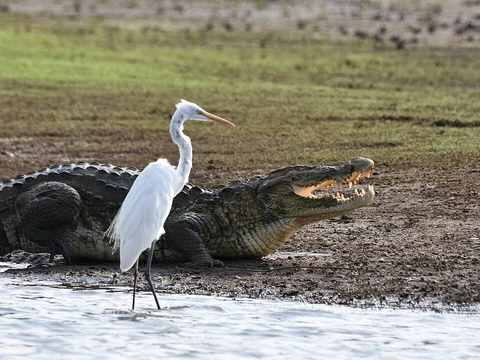
Azhdarchids were a successful group with a global distribution, and were among the last surviving pterosaurs. Previously thought to be the only pterosaur family at the end of the Cretaceous, recent studies indicate other pterosaurian fauna based on pteranodontian fossils from the latest Cretaceous. Their lifestyle has been debated: the idea that they were skimmers has been cast into doubt, and they may have led a more terrestrial existence similar to modern storks and ground hornbills. Most large azhdarchids probably fed on small prey, including hatchling and small dinosaurs, though Hatzegopteryx may have tackled larger prey and Alanqa may have crushed shellfish. Phylogenetic studies have refined their relationships, with recent analyses recovering clades such as Quetzalcoatlida, Hatzegopterygia, and Quetzalcoatlini, and noting that Quetzalcoatlus may be polyphyletic. Their legacy includes being the largest flying animals ever, with an unnamed Transylvanian specimen nicknamed 'Dracula' possibly reaching a wingspan of 12–20 meters.
Did You Know?
- Azhdarchidae is named after the azhdar, a dragon-like creature in Persian mythology.
- The largest azhdarchids achieved wingspans of 10–12 meters, but an unnamed Transylvanian specimen nicknamed 'Dracula' may have had a wingspan of 12–20 meters.
- Azhdarchids were originally classified as close relatives of Pteranodon due to their long, toothless beaks.
- Recent studies suggest azhdarchids may have led a terrestrial existence similar to modern storks and ground hornbills, not a skim-feeding lifestyle.
More in Extinct Archosaurs 1-24
Spotted an error? Know more?
This is a living reference — every entry is fact-audited, and reader corrections feed straight into our audit queue. Suggest an edit · See this site's audit record